Wednesday, April 20, 2011
CHAPTER VI: ECOSYTEM-PRODUCERS, CONSUMERS, AND DECOMPOSERS
watch the video above for our next chapter VI, The ecosystem
For further information, please send your email to miss.maria.irawati@gmail.com

Ulat Bulu Sampai Bali
watch the video above for our next chapter VI, The ecosystem
For further information, please send your email to miss.maria.irawati@gmail.com
Tuesday, April 5, 2011
ORGANIZATION OF LIVING ORGANISM
Dear all 7th grader.....
FINALLY.............I DID IT!!!

for waiting.............
I give additional 3 days for those who got special assignment.
I will try again in the morning, but now...I'm sleepy...so... Good nite:)
here are the presentation to help you learn:
The password to open the file: the name of SMP administration officer (female, 5 letters, low case)
I didn't lock it for editing, but you may not change it.........OK?
to understand better about the topic, please read the footnote.
I didn't lock it for editing, but you may not change it.........OK?
to understand better about the topic, please read the footnote.
For further information, please send your email to miss.maria.irawati@gmail.com
Friday, April 1, 2011
HOME WORK OF CHAPTER V and MID TERM MAKE UP TEST
To all 7th grader,
if your mid term score<6.5
you must attend the remedial on Wednesday, march 6th, 2011 at second break in Biology Laboratory. Bring your last mid term and daily test results with the right answer.
the make up test will be on Thursday, March 7th, 2011. also at second break. Bring black pens
If you can't, you must inform me minimum 1 day before the D-day.
7E:
Due date: Thursday, March 7th 2011
Learn from the power point (part 1 & 2) and the hand out for the quiz.
topic of the quiz: cell and organelles
7C:
due date: Tuesday, March 5th, 2011
How these cells are specialized? (relationship between structure and function)
due date: Monday, March 4th, 2011
Differentiate (compare and contrast) in a T-chart between the root hair cell and xylem vessel in your Science in Focus page 13-14.
For further information, please send your email to miss.maria.irawati@gmail.com
if your mid term score<6.5
you must attend the remedial on Wednesday, march 6th, 2011 at second break in Biology Laboratory. Bring your last mid term and daily test results with the right answer.
the make up test will be on Thursday, March 7th, 2011. also at second break. Bring black pens
If you can't, you must inform me minimum 1 day before the D-day.
7E:
Due date: Thursday, March 7th 2011
Learn from the power point (part 1 & 2) and the hand out for the quiz.
topic of the quiz: cell and organelles
7C:
due date: Tuesday, March 5th, 2011
How these cells are specialized? (relationship between structure and function)
- xylem vessel
- nerve cell
- muscle cell
- sperm cell
due date: Monday, March 4th, 2011
Differentiate (compare and contrast) in a T-chart between the root hair cell and xylem vessel in your Science in Focus page 13-14.
For further information, please send your email to miss.maria.irawati@gmail.com
Monday, March 21, 2011
AP: CELL MODEL
Dear all 7th graders,
here are your instruction for your academic prompt in second semester.
You can download it by clicking the link below:
the password to open the file will be: your Bahasa teacher's name, all in low case letters (5 letters)
and please remember to choose 'read only' because you may not change the contents:)
Please be prepared, because I give no permission to leave the class to take anything left behind or to buy something.
Its a group work, you can read the grouping at your class board announcement.
or you may click the link below:
You will have 2 periods of Biology class time to do it, but you can also use your break times (you may not use other class time or reading time)
Bring all the materials you need on these schedule:
7C: Tuesday, March 29th 2011
7D: Tuesday, March 29th 2011
7E Thursday, March 31st 2011
7F: Friday, March 25th 2011
DO YOUR BEST= NO REGRET
For further information, please send your email to miss.maria.irawati@gmail.com
Friday, March 18, 2011
CELL AND ORGANELLES
Dear all 7th graders,
here is the first presentation to help you learn about the Cell and Organelles.
CELL AND ORGANELLES PART I
password to open the file:
her nickname, 5 letters(low case)
 you know who she is...right?
CELL AND ORGANELLES PART II
password: what subject does she teach? 6 lower case letters
For this topic, you have to read your Science in Focus page 2-15,
it will benefits you if you do the exercises too;)
For further information, please send your email to miss.maria.irawati@gmail.com
here is the first presentation to help you learn about the Cell and Organelles.
CELL AND ORGANELLES PART I
password to open the file:
her nickname, 5 letters(low case)
 you know who she is...right?
CELL AND ORGANELLES PART II
password: what subject does she teach? 6 lower case letters
For this topic, you have to read your Science in Focus page 2-15,
it will benefits you if you do the exercises too;)
For further information, please send your email to miss.maria.irawati@gmail.com
Sunday, March 13, 2011
Preparing Animal and Plant Cells Slides
here, you can watch how to make the specimen in Biology class, although not all of the tolls are the same, but more or less you can get the picture and do better in my class.
I havent got a chance to listen and watch all, so if you have any comments to make improvement, plese do not hesitate to send or talk to me;)
For addition, this is the parts of a simple light microscope,

the picture is taken from:
http://microscope-camera.net/wp-content/uploads/2010/08/compound-light-microscope.jpg
you can visit the web above to get further explanation.
I havent got a chance to listen and watch all, so if you have any comments to make improvement, plese do not hesitate to send or talk to me;)
For addition, this is the parts of a simple light microscope,

the picture is taken from:
http://microscope-camera.net/wp-content/uploads/2010/08/compound-light-microscope.jpg
you can visit the web above to get further explanation.
I'll see you in class
For further information, please send your email to miss.maria.irawati@gmail.com
For further information, please send your email to miss.maria.irawati@gmail.com
Thursday, March 3, 2011
why bat is a mammal and penguin is an Aves?
if you observing the video above you can see the body of a bat is covered with fur not with feather and the bats give birth while Aves should lay eggs.
A penguin on the other hand, looks like it covered with fur, but if you take a closer look.....the penguin's body is covered by small and stiff feathers, and they also lay eggs (click it if you want to see the movie).
picture taken from:
http://www.seaworld.org/animal-info/info-books/penguin/images/pic-incubating-single-egg.jpg
visit this web to observe their feathers:
http://www.penguinscience.com/education/adaptations_feathers.php
Those are the characteristics that you can easily see....how about the other characteristics too distinguish them?
please look at your notes to get the right answers:)
For further information, please send your email to miss.maria.irawati@gmail.comTuesday, February 22, 2011
ANIMAL CLASSIFICATION
This Friday all of you will have your Mid test.
to help you learn, here are the presentation.
password to open: your computer teacher name 4 letters (low case)
you may not modify it, so....after the first password....choose read only!!!!
HAND OUT INVERTEBRATES (REVISION IN RED)
arthropoda 7D (combined & revised)
VERMES 7C & D (COMBINED N REVISED)
key for the daily test (revision in red)
remember to use black pens and no correction pen
G-Luck and have a nice study.
For further information, please send your email to miss.maria.irawati@gmail.com
Wednesday, November 24, 2010
PLANT CLASSIFICATION
Dear all 7th grader,
here is the presentation to help you learn for your daily test.
just clicks the link below:
password to open the file:
your computer teacher name, all in low case letter (4 letters)
Answering your worksheets and do the exercise in your hand out will help you to get the best mark.
and learning from your notes during the lesson and handouts are important.
for your daily test.....dont forget to bring dictionary if you think you're going to need it.
Good luck.
For further information, please send your email to miss.maria.irawati@gmail.com
Wednesday, November 10, 2010
biology investigation (assignment for chapter 2)
Dear all grade 7
here are your dead line:
7C &7D: Thursday, Nov 18th,2010
7E:Friday, Nov 19th,2010
7F:Tuesday, Nov 16th,2010
to help you do your assignment for this chapter, here are the instruction. just click the link below it and enter the password to open it.
INSTRUCTION
password to open the file:
your computer teacher name(4 letters) in low case letter.
if it doesn't work, I did my best and I hope you will do your best too.
for those who ask why I put a password, its because some of you dont even know your own teacher:)
Please check the scientific name of the organism that you found in this web:
http://www.itis.gov/
because some company use ‘trade name’ (fake) which seems to be correct for commercial reason.And in one class there should be minimum 5 types of organisms
Good luck
For further information, please send your email to miss.maria.irawati@gmail.com
Monday, November 8, 2010
classification of living thing
Dear all grade 7
here are your daily test schedule for chapter II
7C and 7D : Tuesday, November 9th, 2010
7E and 7F : Thursday, November 11th, 2010
Material:
#characteristics of living thing
#history of classification
#why and how do we classify?
#hirarchy of taxonomic major group
#scientific name
#dichotomous key
#five kingdoms
next time.....make notes during the class!!!
Good luck for the test
For further information, please send your email to miss.maria.irawati@gmail.com
here are your daily test schedule for chapter II
7C and 7D : Tuesday, November 9th, 2010
7E and 7F : Thursday, November 11th, 2010
Material:
#characteristics of living thing
#history of classification
#why and how do we classify?
#hirarchy of taxonomic major group
#scientific name
#dichotomous key
#five kingdoms
to help you learn for this chapter, here are some of the presentation to help you learn. just click the link below it and enter the password to open it.
CHARACTERISTICS OF LIVING THINGS (4rd trial)
CLASSIFICATION(4rd trial)
FIVE KINGDOMS (3rd trial)
FIVE KINGDOMS (1st trial)
can anyone suggest a free web to upload the files? because 20 minutes to download the five kingdoms is definitely too long and my second trial in another web leads to porn. third trial??? don't know the result.
so please suggest a 'safe but fast enough web'
thank you
password to open the file:
your computer teacher name(4 letters) in low case letter.
next time.....make notes during the class!!!
as usual:
bring your own dictionary (science dictionary and alva link are not acceptable),
use black pens, and no correction pen.
Good luck for the test
For further information, please send your email to miss.maria.irawati@gmail.com
Friday, July 23, 2010
ASSIGNMENT FOR 8A
Dear all member of 8A,
your home work for next monday meeting is to watch the two videos below which are taken from you tube
and
you can watch directly from the you tube by clicking the two links bove or watch it from my previous posts.
prepare yourself for the quiz.....
have a nice weekend
Ms.Ira
Second video: Carbon Cycle and Global Warming
Make sure you can hear the explanation
For further information, please send your email to miss.maria.irawati@gmail.com
First Video: The Carbon Cycle
Make sure you can hear the explanation
For further information, please send your email to miss.maria.irawati@gmail.com
Thursday, July 22, 2010
answer for your questions (2) update
Hi…..
these are the answer for the questions from the other classes and 1 which is left behind to answer because it is a simple question but it need time to think about it. A good one, and apparently some of you have similar question.
Can you tell me how to study in a good way?
What if we don’t understand the lesson that had been taught over and over again?
How to understand the lesson which is delivered in English?
For all the questions above……
Do you remember ‘the super brain’ tips? Well it could help you.
For me, there are some steps:
1. Stop saying I can’t, and starts saying I can
2. understand myself( ie: am I auditory/visual/kinesthetic type of student?, will I remember better if my note is in the form of mind map/ small cards/colorful notes/something else?, how can I encourage myself to study harder?, how to overcome my weaknesses?, etc)
3. set a goal
4. always searching for the answer if I don’t understand, not only from my mentor/supervisor, sometimes I search from the internet, another time I ask my capable experienced friends (sometimes they are older than me, sometimes they are younger. There was a time when I learn how to use the computer and organize his blog from a student). The key is never hesitate and never fell inferior/ashamed just because you fell you don’t understand. Never stop learning!
5. Never afraid to make mistakes. Take it as a part of learning. Takes failure as a postponed success, learn from it and move forward. Trying a new method sometimes makes me afraid to fail, but I always try to overcome it by saying to myself “I’d better try and fail than never” I won’t learn anything if I never try:).
6. Reflection. Sometimes after I did a thing, I tries to think what I did best, what I need to increase to get better, what are the obstacles, how to overcome it if I have to face it again, something like that…usually at night
7. Last but not least…I learn for myself, for my future, as a step to reach my dream….that way I learn with a happy felling. Believe me it’s a way…..different effect if you learn to make other people satisfied because they keep telling you it’s something you have to do. So find your own motivation, it’s the key!
Inform me if it could help you, and if other reader have opinion which could help your friend here, sharing it will be helpful
When is your birthday?
March 13
How do you make your assessment?
Your question is not clear enough. Is it for final mark in your report card? I think you had your explanation during your ‘Mabis’
Why the class is separated into biology class and physics class?
Try to answer this question:
Which class would help you learn better?
· Class A which have 5 students in a classroom with 1 teacher
· Class B which have 100 students in a classroom with 1 teacher
Your class is not separated to learn two different things, because on the third and fourth period Biology class will learn about physics and physics class will learn about biology.
Will we have a lots of experiments?
You will have enough experiments which depends on the topic.
How old are you?
Still young, why you want to know?
For further information, please send your email to miss.maria.irawati@gmail.com
Tuesday, July 20, 2010
Introduction Grade 7
Hello......
this is the presentation, click the link below and follow the next instructions.
Classroom Procedure for Grade 7
the answers for all of your questions will be uploaded next time, because I have to go home now.
Have a nice day.....:)
For further information, please send your email to miss.maria.irawati@gmail.com
this is the presentation, click the link below and follow the next instructions.
Classroom Procedure for Grade 7
the answers for all of your questions will be uploaded next time, because I have to go home now.
Have a nice day.....:)
For further information, please send your email to miss.maria.irawati@gmail.com
Wednesday, July 7, 2010
welcome!
First..to all seventh grader…..

To 8A hi…..nice to meet you again:)
My first impression for Grade 8…..OMG…..what do you eat during the last holiday? You are growing so fast! I hope you are also ‘develop’ ehm….ehm…..care, respect, commit:)
My first impression for Grade 7….you didn’t ask too much, which could be a good thing in one way and not too good in the other way. I hope it was because you understand all of my explanation and agree to all of it…..other way it means you were afraid to ask.
Well don’t be afraid, you are a student and you have to ask to get knowledge! Although when you are asking something to anybody, please remember…….’care & respect’.
Now… the answer:
How long have you been in Santa Laurensia?
I’ve been here since August 1st 2007, so how long have I been working here?
What is your hobby?
Reading, eating, drawing, traveling
Miss, can we use a note book with colorful pages?
What is the purpose of a note book?
Will a colorful note book help you to understand better?
This book is not for me, so please decide after you know the answer of the questions above.
Where are you from?
Surakarta is my hometown
Where do you live?
At the teacher’s dormitory near the school. Couldn’t mention the address….I have enough seeing you during school, no offense…ok?:)  Have a nice day.......
To 8A hi…..nice to meet you again:)
My first impression for Grade 8…..OMG…..what do you eat during the last holiday? You are growing so fast! I hope you are also ‘develop’ ehm….ehm…..care, respect, commit:)
My first impression for Grade 7….you didn’t ask too much, which could be a good thing in one way and not too good in the other way. I hope it was because you understand all of my explanation and agree to all of it…..other way it means you were afraid to ask.
Well don’t be afraid, you are a student and you have to ask to get knowledge! Although when you are asking something to anybody, please remember…….’care & respect’.
Now… the answer:
How long have you been in Santa Laurensia?
I’ve been here since August 1st 2007, so how long have I been working here?
What is your hobby?
Reading, eating, drawing, traveling
Miss, can we use a note book with colorful pages?
What is the purpose of a note book?
Will a colorful note book help you to understand better?
This book is not for me, so please decide after you know the answer of the questions above.
Where are you from?
Surakarta is my hometown
Where do you live?
At the teacher’s dormitory near the school. Couldn’t mention the address….I have enough seeing you during school, no offense…ok?:)
oh...one thing, the Classroom procedures will be here after I met 7 C, D, E and F
here are some of the information that you have to remember:
Supplies to bring to class:
A. self and Brain
B. Materials (1. SIF 2. Exercise book 3. Note book 4. Clear Holder)
C. Home Work ( 1.Assignment 2.Internet 3.newspaper )
Biology class rules:
#Always write your full name/number and class correctly
#Collect your assignment and homework on time & well done
#Never forget to raise your hand and wait for the permission before you speak.
#Permission to the toilet will be given only 5 minutes at the beginning of the class.
#Collect your assignment and homework on time & well done
#Never forget to raise your hand and wait for the permission before you speak.
#Permission to the toilet will be given only 5 minutes at the beginning of the class.
#Always answering all my questions during the test, quiz, assignment, presentation, etc in English! If you can’t mix it with Indonesian/Bahasa! If you answering all in Indonesian, I will consider the answer do not exist
#No correction pen during the test and quiz.
#No correction pen during the test and quiz.
#Bringing dictionary during the test and class period is your own responsibility, borrowing during the test is not allowed.
#Bring your clear holder with all its contents, note book, and exercise book
#Bring your SIF Biology when our topics are: characteristics of living things, the five kingdoms, cell, and ecosystem.
#Bring your clear holder with all its contents, note book, and exercise book
#Bring your SIF Biology when our topics are: characteristics of living things, the five kingdoms, cell, and ecosystem.
#For every violation, I will give you a personal assignment. If you are late collecting it, that means you want your assignment to be doubly.
Have a nice day.......For further information, please send your email to miss.maria.irawati@gmail.com
Wednesday, May 5, 2010
Thursday, April 29, 2010
Invertebrates-hndout
1.Phylum Porifera
Every one of you might be familiar with Sponge Bob right? Well the author refers to this asymmetrical phylum of vertebrates known as the sponge.
It is called the simplest form of animal life because although they are multicellular organisms which contain several different cell types
they are lacking true tissue.
They are aquatic animals (live in water) and do not move around (sessile animal) with lots of pores (holes) all over their bodies. They are all filter feeders (animals that obtain nutrients by filtering suspended particles or small organisms from water). Most sponges have spikes which support it, keeping it upright in the water and defending itself from the predators.
 2.Phylum Cnidaria
Members of this phylum have radial symmetry, they are aquatic animals. Most of them have tentacles arranged in a ring around their mouth with nematocysts (stinging cells which can release toxic or sticky substances to paralyze the prey). It has a gastrovascular cavity for digestion with one single opening to this cavity that functions as both mouth and anus. They have two different body plans:
1).Polyp (sessile, reproduce by budding)
2).Medusa (motile, sexual reproduction)
hydraSome species of cnidarians live in a colony (a group of many individual animals living together), one of them is stony coral. Both sea anemones and coral occurs only as polyps in the marine world. Other species such as hydra prefer to live soliter (alone) in a fresh water habitat.
Examples : jellyfish, hydra, sea anemones, coral


 hydra:
 sea anemone:
 picture of stony coral :
 3. Phylum Molusca
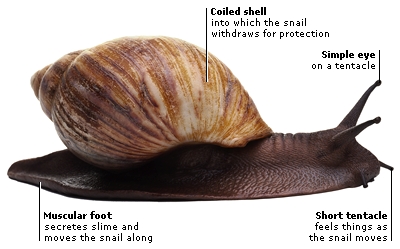
They are invertebrates with soft bodies that are often protected by a hard outer shell. A mollusk has a thin layer of tissue called a mantle that covers its internal organs, which in many mollusks produce a hard shell. It has a digestive system with two opening. Three major classes of mollusca are
· Class Gastropoda (some have shells and move with a muscular foot; ex: snail & sea slug)


 tapeworm:
5.Phylum
Nematoda
Known as a round worm it has a cylindrical body. They look like tiny strands of cooked spaghetti, which are pointed at each end. It has a digestive system that is like a tube, open at both ends (starts from mouth and ends in anus).
Some of them are parasites (ie: Ascaris lumbricoides and hook worms) or free living animals.
 6.Phylum Annelida
Known as segmented worms which have bodies made of many linked sections known as segments. Earth worms and leeches are included in this phylum. They are hermaphrodites (have male and female reproductive organs in one organism) but they cross-fertilize. Earth worms respirate through their moist skin.


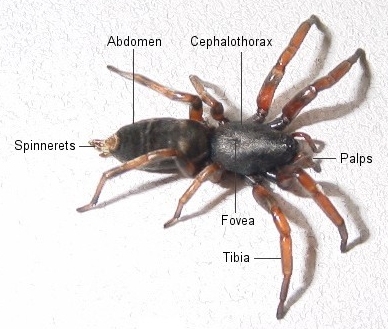
7. Phylum Arthropoda
Athopod means jointed legs. All arthropods have an exoskeleton or outer skeleton (have skeleton outside the body) which protects them and helps prevent water evaporation. They have a segmented body and jointed attachment called appendages (wings, mouth parts, and legs). They have bilateral symmetry, and open circulatory system with two openings.
Metamorphosis: The body form changes from embryo to adults. It increase in size, reorganizes tissue, remodels its body parts.
Complete: egg→larva→pupa→adult

Every one of you might be familiar with Sponge Bob right? Well the author refers to this asymmetrical phylum of vertebrates known as the sponge.
It is called the simplest form of animal life because although they are multicellular organisms which contain several different cell types
they are lacking true tissue.
They are aquatic animals (live in water) and do not move around (sessile animal) with lots of pores (holes) all over their bodies. They are all filter feeders (animals that obtain nutrients by filtering suspended particles or small organisms from water). Most sponges have spikes which support it, keeping it upright in the water and defending itself from the predators.
 Examples: tube sponge, glass sponge, sea sponge
picture of tube sponge:
2.Phylum CnidariaMembers of this phylum have radial symmetry, they are aquatic animals. Most of them have tentacles arranged in a ring around their mouth with nematocysts (stinging cells which can release toxic or sticky substances to paralyze the prey). It has a gastrovascular cavity for digestion with one single opening to this cavity that functions as both mouth and anus. They have two different body plans:
1).Polyp (sessile, reproduce by budding)
2).Medusa (motile, sexual reproduction)
hydraSome species of cnidarians live in a colony (a group of many individual animals living together), one of them is stony coral. Both sea anemones and coral occurs only as polyps in the marine world. Other species such as hydra prefer to live soliter (alone) in a fresh water habitat.
Examples : jellyfish, hydra, sea anemones, coral
hydra: sea anemone: picture of stony coral : 3. Phylum MoluscaThey are invertebrates with soft bodies that are often protected by a hard outer shell. A mollusk has a thin layer of tissue called a mantle that covers its internal organs, which in many mollusks produce a hard shell. It has a digestive system with two opening. Three major classes of mollusca are
· Class Gastropoda (some have shells and move with a muscular foot; ex: snail & sea slug)
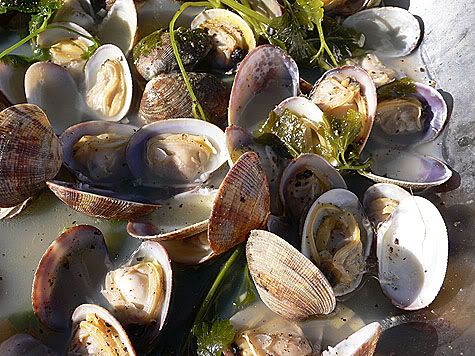
· Class Bivalvia (have two shells held together; filter feeder; ex: oyster, clams, scallop)
· Class Cephalopoda (have tentacles→ modification from muscular foot; no shell except nautiluses; ex: octopuses & squid) 
Vermes: worm like
The simplest animal with a brain which are sensitive to light, touch, and vibration from the environment. For example, if an earth worm on the surface of the ground gets too much light or senses vibration of a foot step, the worm will quickly return underground to avoid it.
4.Phylum
Platyhelminthes
They are known as flatworms because they are flat like a ribbon and as soft as jelly. They have bilateral symmetry. Many flatworm are parasites in vertebrates bodies (ex: tape worm and flukes), while some of them (ex: planarian) are free living in the aquatic or damp soil habitat.
planarian:
Vermes: worm like
The simplest animal with a brain which are sensitive to light, touch, and vibration from the environment. For example, if an earth worm on the surface of the ground gets too much light or senses vibration of a foot step, the worm will quickly return underground to avoid it.
4.Phylum
Platyhelminthes
They are known as flatworms because they are flat like a ribbon and as soft as jelly. They have bilateral symmetry. Many flatworm are parasites in vertebrates bodies (ex: tape worm and flukes), while some of them (ex: planarian) are free living in the aquatic or damp soil habitat.
planarian:
tapeworm:5.Phylum
Nematoda
Known as a round worm it has a cylindrical body. They look like tiny strands of cooked spaghetti, which are pointed at each end. It has a digestive system that is like a tube, open at both ends (starts from mouth and ends in anus).
Some of them are parasites (ie: Ascaris lumbricoides and hook worms) or free living animals.
6.Phylum AnnelidaKnown as segmented worms which have bodies made of many linked sections known as segments. Earth worms and leeches are included in this phylum. They are hermaphrodites (have male and female reproductive organs in one organism) but they cross-fertilize. Earth worms respirate through their moist skin.
7. Phylum Arthropoda
Athopod means jointed legs. All arthropods have an exoskeleton or outer skeleton (have skeleton outside the body) which protects them and helps prevent water evaporation. They have a segmented body and jointed attachment called appendages (wings, mouth parts, and legs). They have bilateral symmetry, and open circulatory system with two openings.
Metamorphosis: The body form changes from embryo to adults. It increase in size, reorganizes tissue, remodels its body parts.
Complete: egg→larva→pupa→adult
Incomplete: egg→nymph→adult
 insecta:
compound eye: arachnid:
 crustaceae:
.jpg) myriapoda:
myriapoda: 8. Phylum Echinodermata
They are invertebrates with an endoskeleton and water vascular system (a network of internal canals to pump water to the different parts of their body for movement, feeding and gas exchange). The skin of most echinoderms is covered by spines. They have bilateral symmetry as larvae and pentaradial symmetry as adults (body part usually in multiples of five). Adults have no head or brain and they live in salt water. They have tube feet for movement, the end of them are sticky. When filled with water they act like small sticky suction cups. The stickiness and suction enable the tube feet to grip the surface beneath the echinoderm so it can move along slowly and can help it to capture food. Respiration of echinoderm is done using skin gills.
sea urchin
star fishExamples: star fish, sea urchin, sea cucumber, sand dollars

sea cucumber:

http://i.ytimg.com/vi/w0QzSYQGsnA/0.jpg
http://plpnemweb.ucdavis.edu/Nemaplex/images/Annelida1.gif
http://www.bu.edu/gk12/eric/earthworm.jpg
http://eyemakeart.files.wordpress.com/2009/03/insectwithcompoundeye.jpg
http://www.findaspider.org.au/info/images/combined1.jpg
http://students.umf.maine.edu/~hustontf/squid2.jpg
http://i11.photobucket.com/albums/a154/foodhoe/oct07/hi_clams.jpg
http://www.infoplease.com/images/ESCI299MOLLUS006.jpg
http://www.cartage.org.lb/en/themes/sciences/zoology/biologicaldiverstity/AnimalsI/AnimalsI.htm
http://www.marietta.edu/~biol/biomes/images/oceans/sea_cucumber_8178_800.jpg
http://universe-review.ca/I10-82-starfish.jpg
http://www.marlin.ac.uk/images/taxonomy_descriptions/Myriapoda.jpg
http://www.mun.ca/biology/scarr/142004_Arthropoda_(Crustacea).jpg
insecta:compound eye:
arachnid:crustaceae:myriapoda:8. Phylum EchinodermataThey are invertebrates with an endoskeleton and water vascular system (a network of internal canals to pump water to the different parts of their body for movement, feeding and gas exchange). The skin of most echinoderms is covered by spines. They have bilateral symmetry as larvae and pentaradial symmetry as adults (body part usually in multiples of five). Adults have no head or brain and they live in salt water. They have tube feet for movement, the end of them are sticky. When filled with water they act like small sticky suction cups. The stickiness and suction enable the tube feet to grip the surface beneath the echinoderm so it can move along slowly and can help it to capture food. Respiration of echinoderm is done using skin gills.
sea urchin
star fishExamples: star fish, sea urchin, sea cucumber, sand dollars
sea cucumber:
pictures taken from:
http://web.gccaz.edu/~lsola/bio182/labreview/platyhelminthes/Tapeworm.jpg
http://i.ytimg.com/vi/w0QzSYQGsnA/0.jpg

http://plpnemweb.ucdavis.edu/Nemaplex/images/Annelida1.gif

http://www.bu.edu/gk12/eric/earthworm.jpg

http://eyemakeart.files.wordpress.com/2009/03/insectwithcompoundeye.jpg

http://www.findaspider.org.au/info/images/combined1.jpg
http://students.umf.maine.edu/~hustontf/squid2.jpg

http://i11.photobucket.com/albums/a154/foodhoe/oct07/hi_clams.jpg
http://www.infoplease.com/images/ESCI299MOLLUS006.jpg
http://www.cartage.org.lb/en/themes/sciences/zoology/biologicaldiverstity/AnimalsI/AnimalsI.htm

http://www.marietta.edu/~biol/biomes/images/oceans/sea_cucumber_8178_800.jpg


http://universe-review.ca/I10-82-starfish.jpg

http://www.marlin.ac.uk/images/taxonomy_descriptions/Myriapoda.jpg

http://www.mun.ca/biology/scarr/142004_Arthropoda_(Crustacea).jpg
.jpg)
%20coral%20stone,%20Nanumea%20(448x367%20and%20edited)%20P1010559.JPG)
For further information, please send your email to miss.maria.irawati@gmail.com
Subscribe to:
Posts (Atom)